
7 July 2026 · 9 min read · The RayMovals Team
How to Choose a Removal Company: 10 Questions to Ask Before You Book
The short answer: choose a company that gives you a fixed price in writing after it has understood the job, can show you its insurance certificate rather than just say it is insured, has recent reviews that describe specific moves, and will tell you exactly who is turning up and in what vehicle. If a company gets all four right, the rest is detail. If it dodges any one of them, keep looking.
We are a removals team based in Luton, so we see the other side of this every week — customers who have been let down before, quotes that did not hold, and moves that went wrong for reasons that were visible at the booking stage. This guide is what we would tell a friend before they hand over a deposit to anyone, including us.
10 questions to ask before you book
- 1. Can you send me your insurance certificate? — Not 'yes, we're insured'. You want to see Goods in Transit and Public Liability cover named separately, in the company's own name, with dates that include your moving day.
- 2. Is the price fixed, or hourly? — Either can be fair. What matters is that you know which, in writing, and what would change it.
- 3. What exactly does the quote include? — Dismantling and rebuilding, blankets and wrapping, packing materials, and the second address if there is one. Anything not written down may be charged on the day.
- 4. How many movers, and what size van? — It should match your move. A three-bed house is usually a three-person job; two people quoting for it are either planning a long day or planning to rush.
- 5. Will it be your own crew? — Some firms are brokers who pass your job to whoever is free. Ask whose van turns up and whose insurance covers it.
- 6. Have you asked about access? — Floors, lifts, parking, the distance from the van to the door. A firm that quotes without asking has not really priced your move.
- 7. What happens if something is damaged? — Ask how to report it, how long you have, and whether anything you packed yourself is excluded.
- 8. What are the deposit and cancellation terms? — How much up front, when the balance is due, and what happens if your completion date moves.
- 9. What won't you move? — Every firm has a list: paint, gas bottles, chemicals and similar. Better to know now than on the morning.
- 10. Where can I read your reviews? — On Google, where the company cannot choose which ones you see, not only on its own website.
How to check the insurance is real
Almost every removal company will say it is insured. Far fewer will send the certificate without being chased. Asking is normal, and a legitimate firm will not be offended — it is the single quickest way to separate a business from a man with a borrowed van.
- Goods in Transit covers your belongings while they are being loaded, carried and unloaded. This is the one that matters most to you.
- Public Liability covers damage to property and people — a scraped door frame, a dented banister, someone hurt on the day.
- Check the name on the certificate matches the company you are booking. If it is a different business, the job may be subcontracted.
- Check the dates. A certificate that expired last month protects nobody.
- Ask what the cover limit is, per item and per load, and whether high-value items need declaring in advance.
- Ask about boxes you packed yourself. Many Goods in Transit policies treat the contents of customer-packed boxes differently from those packed by the crew, so if something fragile matters to you, find out where you stand before you tape it up.
What a proper written quote should list
A quote is only as good as what it writes down. These are the things ours list, and the things worth checking on anyone else's:
- The date, and the arrival time or window.
- Both addresses — and any extra collection or drop-off points.
- What is being moved: an inventory, or at least a property size and the large items.
- How many movers and what vehicle.
- The access assumptions it is based on: floors, lift or stairs, parking, how far the van can get.
- What is included — dismantling, rebuilding, wrapping, materials — and what would be extra.
- Whether the price is fixed or hourly, and what happens if the job runs longer than expected.
- Deposit, payment and cancellation terms.
If a firm cannot put those things in writing, it has not really quoted. It has guessed, and you will find out by how much on the day.
What a fair price looks like
Prices vary with access, distance and volume, so treat these as a sense check rather than a quote. They are our own local prices, alongside how long each size of move typically takes on the day with everything already boxed up.
| Property size | Time on the day | Man and van (you pack) | Full removal (we wrap & rebuild) |
|---|---|---|---|
| 1-bed | 3–6 hrs, 2 movers + van | £150–£200 | £300–£450 |
| 2-bed | 4–7 hrs, 2 movers + van | £200–£300 | £400–£650 |
| 3-bed | 6–9 hrs, 3 movers + van | £250–£350 | £550–£900 |
| 4-bed+ | 8–12 hrs, 3–4 movers + 2 vans | £350–£500 | £800–£1,300 |
Hourly work is charged by crew size — £65 an hour for one mover with a Luton van, £80 for two, £90 for three — because a bigger move needs more hands, not just more hours. A quote that comes in well under the times above usually means someone is planning to rush, or planning to add to the bill once the van is half loaded.
Red flags worth walking away from
| Green flag | Red flag |
|---|---|
| Fixed quote in writing before the day | "We'll price it up when we see it" |
| Sends the insurance certificate when asked | Says it's insured but never sends anything |
| Company name, address and phone number on the quote | A mobile number and a first name |
| Asks about floors, parking and access before quoting | Quotes a house move in one phone call without a single question |
| Card or bank transfer with a receipt | Cash only, with no paperwork |
| A modest deposit, or none, for a local move | A large sum up front weeks in advance |
| Recent Google reviews describing real jobs | A handful of vague five-star reviews posted in the same week |
| The van says the same name as the website | A different firm turns up on the day |
Dismantling and rebuilding: what to agree in advance
Furniture that has to come apart is where moves most often overrun, and where the difference between firms is easiest to see. A recent job of ours across Luton was four wardrobes and two bedside cabinets. Three were full-height doubles that had to be taken down to get them out of the room; the fourth only needed its doors off. The doubles travelled strapped upright so nothing could shift on the way, and were rebuilt in the new bedroom with the rails and shelves back in, ready to use.
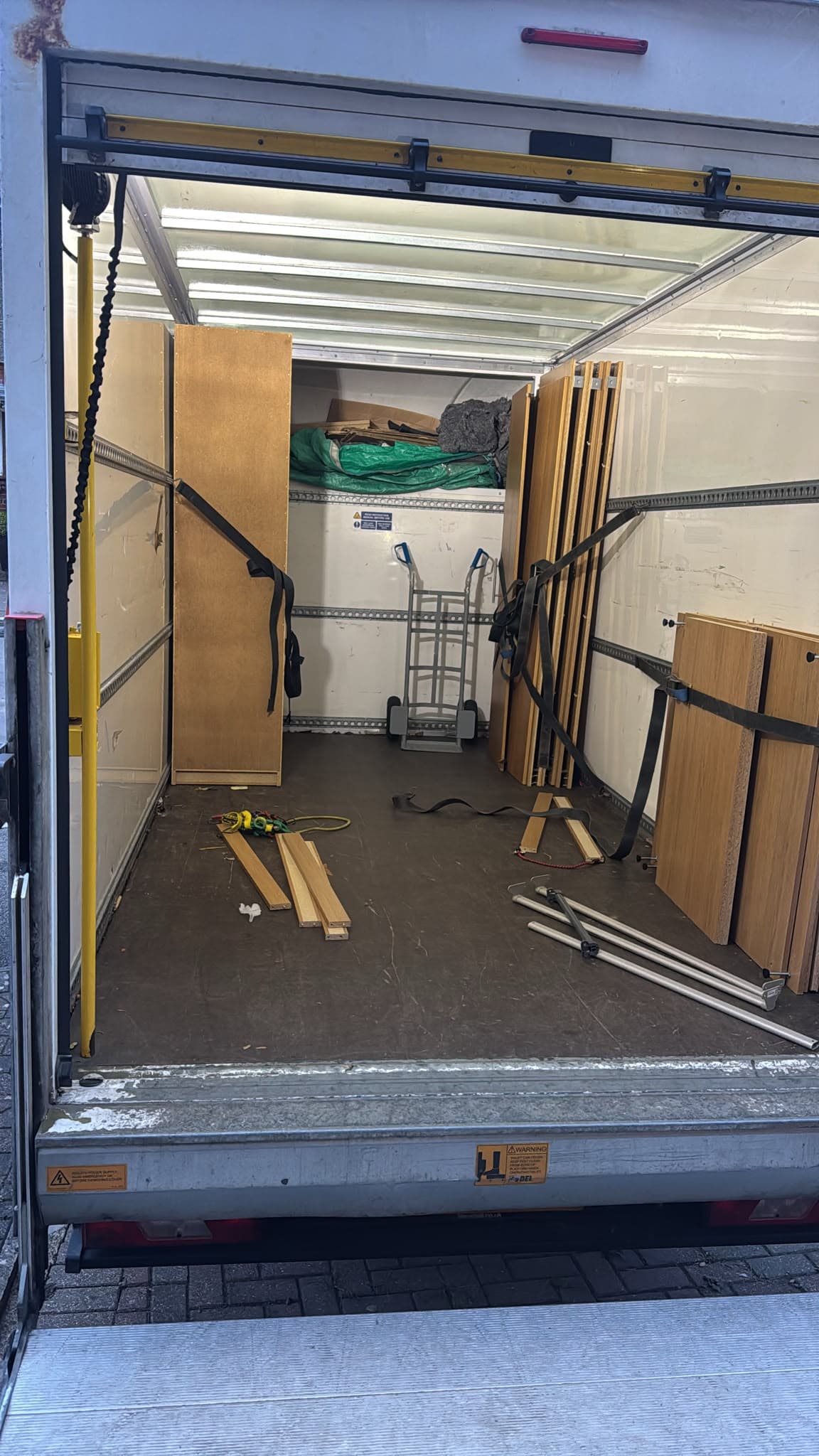
The questions that matter: will the crew bring the tools, is rebuilding included or only dismantling, and will everything be put back in the right room? Get the answers in the quote, not on the day.
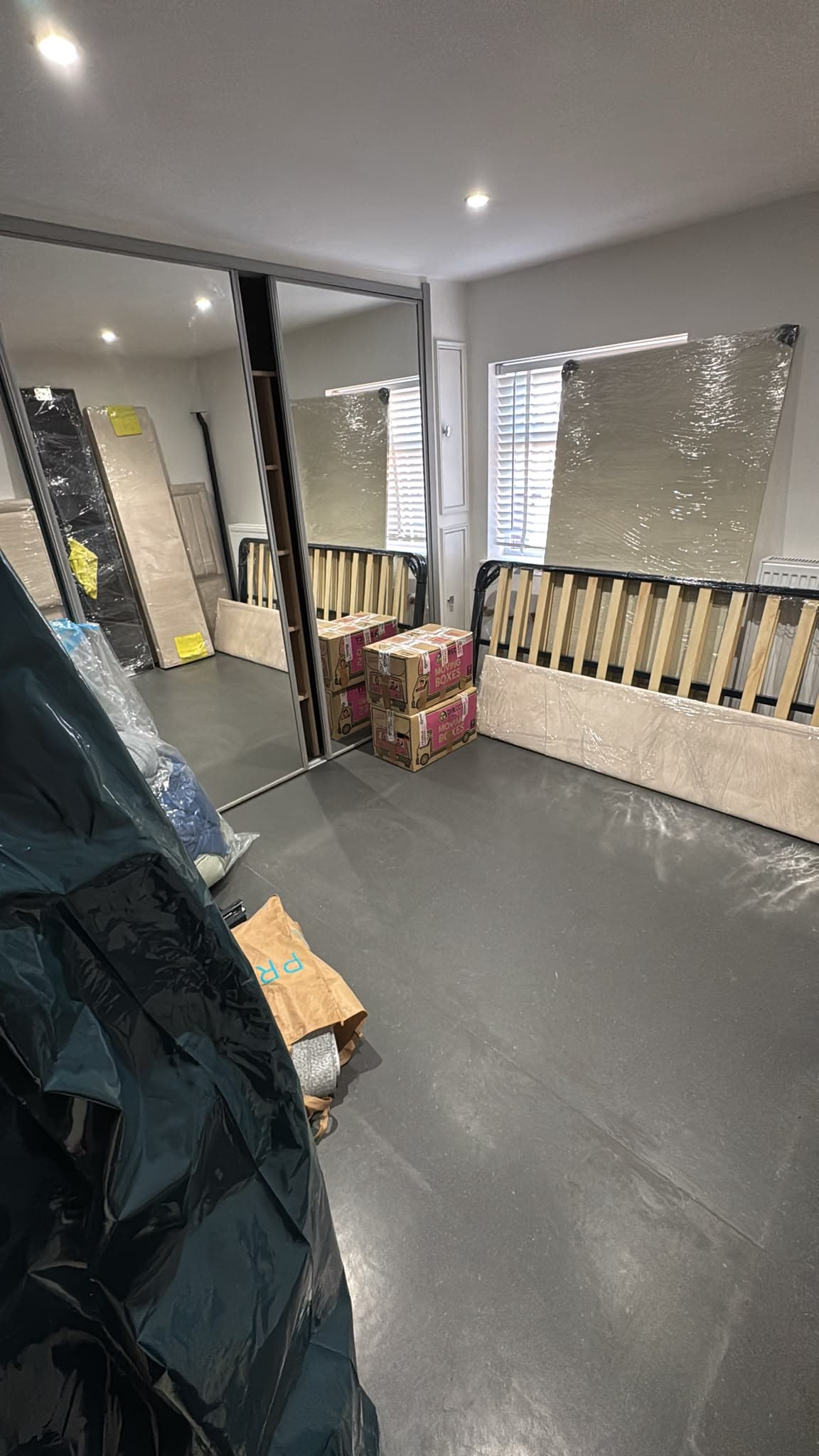
It also pays to say what you want at the far end, because it is not always 'rebuild everything'. On a three-bed move from Luton to a bungalow in Bedford, the customer had renovations still to finish, so beds were dismantled and everything wrapped and deliberately left that way. Three appliances were disconnected at the house and only the washing machine was reconnected and tested at the bungalow, so there was laundry from day one. None of that is unusual — but a mover can only plan for it if you say so when you book.
Parking and access: the part most quotes forget
The most common cause of a long, expensive moving day is not the furniture. It is how far it has to be carried. Before you accept any quote, check that it accounts for:
- Parking. Resident-permit streets, double yellows and busy roads may need a parking suspension or dispensation from the council. Ask who arranges it, how far ahead, and who pays.
- Flats. Is there a lift, and does it need booking? If not, which floor?
- The carry. A van parked at the kerb is a different job from one parked fifty metres down a shared drive.
- More than one address. A second collection point changes the loading order and the time on the day.
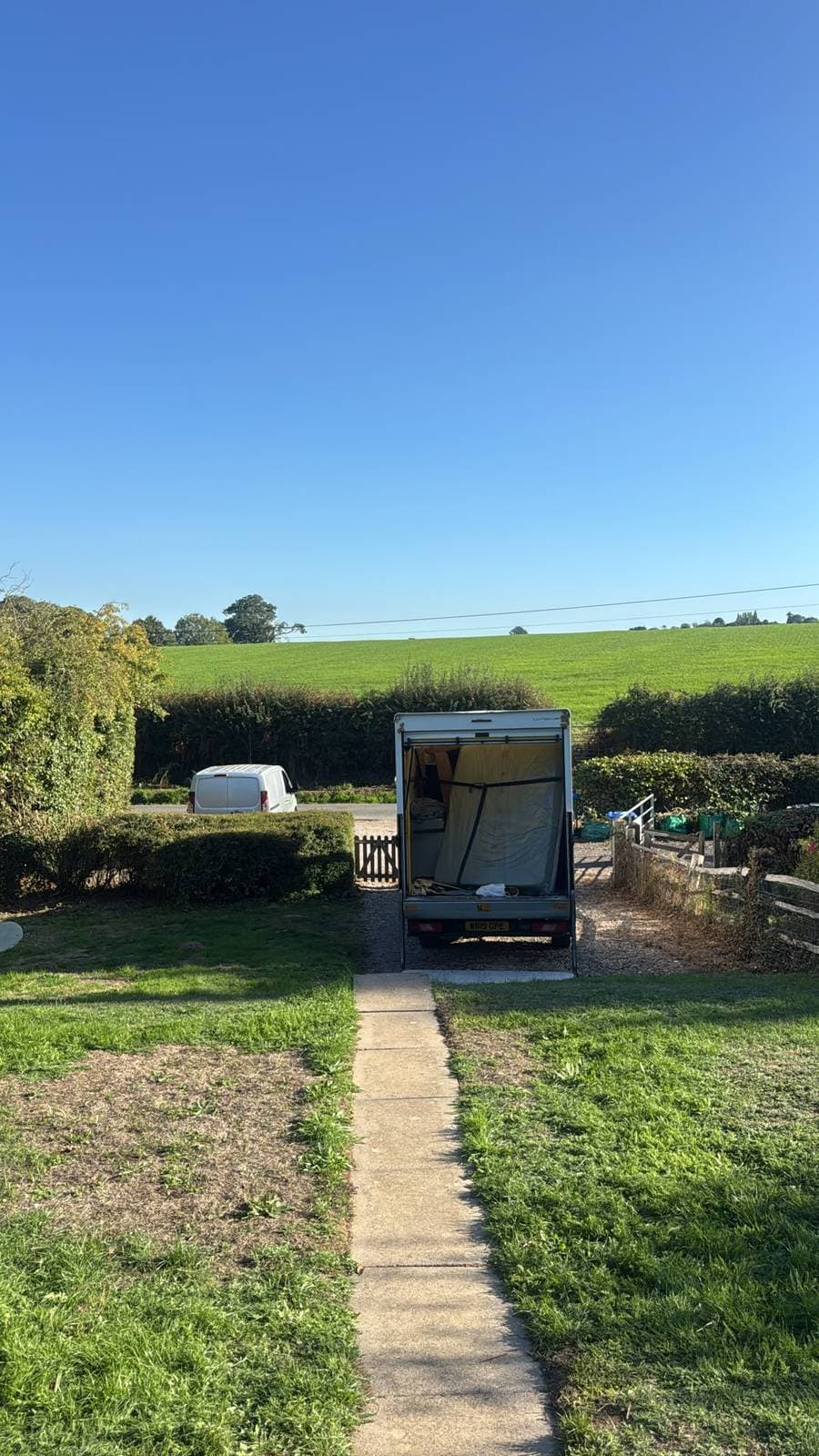
That last one is easy to forget. We moved a three-bed household from Leighton Buzzard to Sussex with furniture collected from two separate addresses before anything could be delivered, and rural access at the far end — gravel drives and narrow lanes rather than kerbside parking. It went in a single run because the van was loaded in reverse order for the delivery, which was only possible because both stops were known when the job was quoted.
Get two or three quotes — and compare like with like
One quote tells you a price. Two or three tell you whether it is a fair one. Line them up against the list above: same date, same inventory, same number of movers, same things included. The cheapest is often cheapest because it leaves something out — usually rebuilding, materials, or the time the job will really take. A slightly higher fixed quote from a firm that has answered every question is almost always the better value, and considerably less stressful.
How RayMovals answers these questions
We are fully insured with Goods in Transit and Public Liability cover on every job, and we will send the certificate if you ask. We give a fixed price in writing before you book, built on your actual property — floors, parking and access included. Hourly work starts at £65 an hour. We turn up in our own van, and our Google reviews are there for anyone to read.
Want straight answers to all ten questions? Get a free, fixed quote from RayMovals.
Get Free Quote